Reference

Heidelberg external fixator J.Pfeil

Description

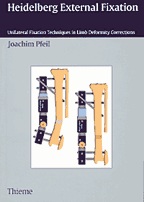
Heidelberg External Fixator

J.Pfeil

Unilateral Fixation Techniques in Limb Deformity Corrections

1998
145 pp, 216 illustrations, most in full-color
softcover

ISBN: 9780865777569 / 9783131109415

Thieme

Thieme Medical Publisher

The goal of this book is to convey the underlying principles and practical information on modern techniques of Unilateral External Fixation System.

The first part of the book covers the principles of unilateral corrective techniques in external fixation and includes detailed descriptions of the actual surgical techniques. Postoperative care, management of potential difficulties, and complications are also described.

The second part of the book is composed of 45 case reports, demonstrating the use of the Heidelberg System in a wide variety of specific congenital and posttraumatic conditions. This section uses before-and-after radiographs and line drawings of how the external fixation equipment is applied to show the benefits of the technique. Indications and therapy, as well as special points unique to each type of case are described. Tips are provided where appropriate.


NATO OTAN

Military Speedfix – A New Versatile External Fixator for Combat Injuries

H. Gerngross, MD   Military Hospital Ulm-Germany

logo

Paper presented at the RTO HFM Symposium on “Combat Casualty Care in Ground Based TacticalSituations: Trauma Technology and Emergency Medical Procedures”, held in St. Pete Beach,USA, 16-18 August 2004, and published in RTO-MP-HFM-109. (Original document)

ABSTRACT

External fixators are the first choice for severe comminuted fractures in long bones on the battlefield. Theapplied fixators of the different medical services in the NATO are mostly bulky in shape, difficult to mount,unstable or too complex to understand.

It was the intend of the NATO working group STANAG 2469 to improve the standards for the external fixation of long bones. The italian proposal for a general fixation system was opposed by the US andGerman delegies in terms of lack of reducability after mounting, questionable stability and applicability.

The German group favourises a special military fixator on the basis of the Speedfix (Smith&Nephew). A special design allows the fixation of the clamp for one fragment in one step by one screw or leverarm. The weight, versatility and stability of the new fixator were tested and found to be stable enough also for the femur. It is reduceable after mounting and easy to understand (one bar system). The price is also comparable to the common systems on the market.

The clinical tests are now under observations. The acceptance by the surgeons is high, the duration of implantation short, and the stability excellent. So we conclude, that the new military speedfix can probably replace the older systems.

INTRODUCTION

The only option of stabilisation complex fractures of long bones in the field is the external fixator. It allows in a simple and undangerous way the primary stabilisation, also in multiple trauma patients. The general advantages of the external fixation in long bones is the facilitation of transport, reduction of fractur pain and the protection of soft tissues and vessels. Also the symptoms of shoc an be reduced. No further extension device is necessary in comminuted or defect fractures. It is also assumed that the stabilisation away from the fracture zone could prevent infection and facilitates the bone and soft tissue debridement. Comples systems cannot fullfill the requirements for military purposes in many ways.

So it was proposed to design not a simple, but simple to understand system, that is versatile to handle, variable for all locations on long bones, ist should have only one screw for thightening one element, has to be reducable and inexpensive.

The International Standardization Agreement Ratification –STANAG 2469 / EXTERNAL FIXATION DEVICES FOR BONE INJURIES describes a single bar external bone fixator that is able to hold long bone fragments in place for transportation of the casualty. The fixator has to be stable enough to avoid secondary dislocation during transportation, and must allow the alignment also when it is in place. External fixation in the field is usually necessary for the lower extremities and pelvis. Upper extremity injuries can usually be initially treated with splinting or casting until they reach a definitive care facility. For transport, single bar fixation may be adequate depending on fracture and patient characteristics. It is not, however adequate for definitive fixation. Additional bars may be added without anesthesia to enhance stability. Additional pins or significant fracture manipulation would require anesthesia. However, since these are usually open fractures the patient will most likely be returning to the operating room for further debridement.

SOLUTION

We designed a new versatile fixator for long bones that can be implanted easy and in a short time by a relatively simple procedure, can be locked by only 1 clamp screw per element, allows reduction in all directions when it is in place. It is tested for the stability that can withstand bending forces and rotational moments also at a femor site. This unit is consisting of a single bar fixator, 4 (schantz) pins 5mm or 6mm in diameter, and 2 multipin clamps along with insertion instruments. This is to be used at the (Forward Surgical Team) FST level. This system generally conforms with the principles described in the STANAG but is fundamentally different in that it allows fracture realignment independent of pin placement (fig 1 and 2).

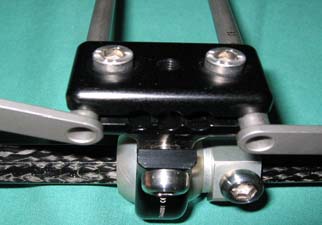
fig 1

Figure 1: Speedfix (Smith&Nephew) 4 screws per fixation element.

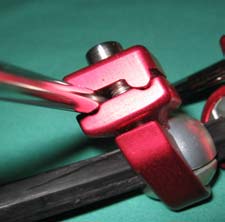
fig 2

Figure 2: “Military Speedfix” Prototype 1 screws per fixation element (Dr.Ing.W.Veith, Heidelberg-Germany).

[Orthopedics] [Fixation] [Pins] [Reference] [Legal notice]